

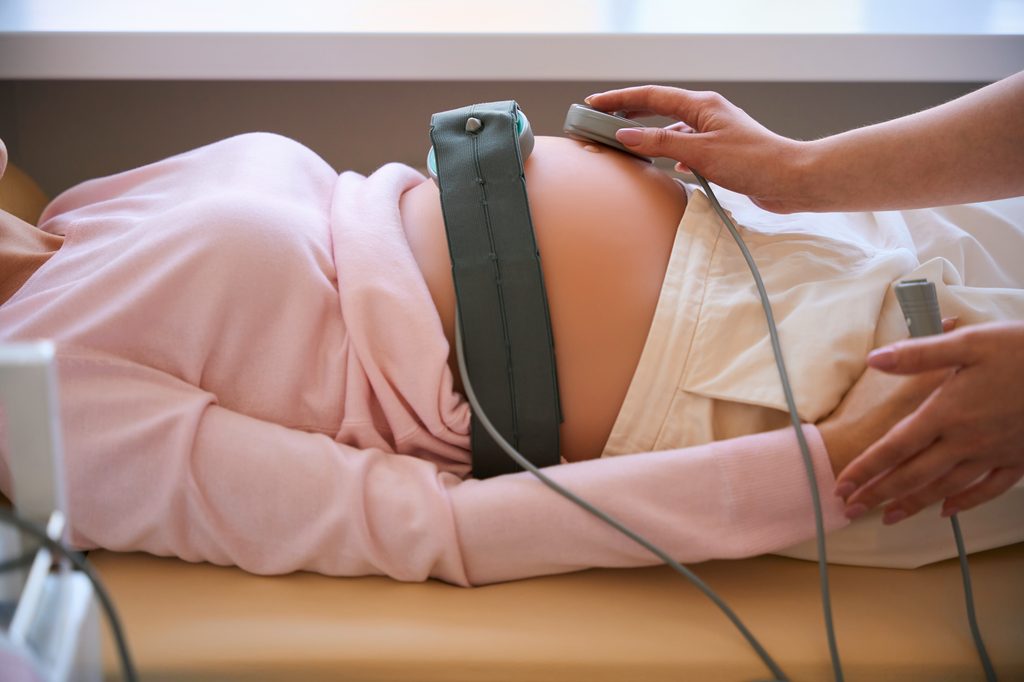
An abnormal fetal heart rate can signal that a baby isn’t getting enough oxygen during labor. These warning signs must be caught and addressed quickly to avoid birth injuries.
The fetal heart rate monitor is the delivery team’s best real-time window into how a baby is handling labor. Every contraction places stress on the baby, and the heart rate pattern shows whether that stress is being tolerated well or becoming dangerous.
An abnormal fetal heart rate pattern is the body’s way of asking for help. When nurses and doctors read these signs correctly and act fast, babies are protected. When these signs are misread, delayed, or ignored, a baby may suffer preventable oxygen deprivation that leads to lifelong challenges.
What a Fetal Heart Rate Strip Shows
A fetal heart rate strip is a continuous tracing of your baby’s heartbeat, recorded alongside your contractions. It gives the care team an ongoing picture of how well your baby is coping. The strip shows several key pieces of information:
- Baseline Heart Rate: Normally 110–160 beats per minute
- Variability: The small, natural fluctuations that signal a healthy nervous system
- Accelerations and Decelerations: How the heart rate responds to each contraction
Reassuring vs. Concerning Patterns
Not every change on the monitor is cause for alarm. Context matters, and trained providers look at the full picture before deciding whether a pattern needs attention.
Reassuring Signs
- A normal baseline with moderate variability
- Accelerations, which suggest the baby is well oxygenated
- Early decelerations that mirror contractions
Concerning Signs
- Fetal tachycardia (sustained rate above 160) or bradycardia (below 110)
- Minimal or absent variability
- Recurrent late decelerations, which can signal reduced oxygen delivery through the placenta
- Recurrent or prolonged variable decelerations, often linked to umbilical cord compression
- A sinusoidal pattern, which is a rare but serious warning sign
The Three-Category System Doctors and Nurses Use
Providers classify fetal heart rate strips into three categories to guide their response.
- Category I strips are normal, and routine monitoring continues.
- Category II strips are indeterminate and require closer evaluation along with corrective steps.
- Category III strips are abnormal and demand prompt action, often including an expedited delivery.
How the Delivery Team Should Respond to an Abnormal Strip
When a strip shows concerning signs, the team has several tools to try to correct the problem before it escalates. Corrective measures often include:
- Repositioning the mother, giving IV fluids, or addressing low blood pressure
- Reducing or stopping Pitocin when contractions are too frequent
- Evaluating for cord compression, placental problems, or uterine rupture
If these steps don’t resolve an abnormal fetal heart rate, escalation becomes necessary. Nurses should notify the physician promptly and use the chain of command if needed. In some cases, this means moving quickly to an emergency C-section or assisted delivery.
Injuries That Can Result When Warning Signs Are Missed
When an abnormal fetal heart rate goes unrecognized or unaddressed, the baby can be deprived of oxygen for too long. This can lead to:
- Hypoxic-ischemic encephalopathy (HIE)
- Cerebral palsy
- Neonatal seizures and developmental delays
- Stillbirth or wrongful death in the most severe cases
We know how frightening and painful these outcomes can be for a family. You deserve clear answers about what happened during your baby’s birth.
When Does a Missed Strip Become Medical Malpractice?
Not every concerning strip means something went wrong medically. The real question is how the care team interpreted the strip and whether their response matched the standard of care. It may be malpractice if the team:
- Misread or failed to monitor the strip
- Had delayed communication between nurses and physicians
- Continued Pitocin despite signs of fetal distress
- Delayed a necessary C-section
The complete strip is often the single most important piece of evidence in a birth injury case, since it provides a timestamped record of exactly what the baby was experiencing and how the team responded.
Fetal Heart Rate Claims in Utah
Utah law requires a prelitigation review before a medical malpractice suit can be filed. This process typically involves obstetric and labor nursing experts who interpret the strip and help establish what the standard of care required in your specific situation.
If the review panel finds a reasonable basis for the claim, you may proceed with a lawsuit against the responsible providers or facility.
Frequently Asked Questions
Q: What is a normal fetal heart rate during labor?
A: Generally 110–160 beats per minute, with moderate variability.
Q: What do late decelerations mean?
A: They can indicate the baby is not getting enough oxygen and require prompt evaluation.
Q: Can an abnormal fetal heart rate cause brain damage?
A: Prolonged oxygen deprivation can lead to HIE or cerebral palsy if it isn’t addressed in time.
Q: How can I get a copy of my fetal monitoring strips?
A: Request the complete labor and delivery records, specifically including the full electronic fetal monitoring strips.
Q: Does an abnormal strip mean my doctor did something wrong?
A: Not necessarily. A legal and medical review can determine whether the response met the standard of care.
Q: How much does it cost to have my case reviewed?
A: Consultations are free, and most medical malpractice attorneys work on contingency. Contingency means there’s no legal fee unless your case recovers.
Get Answers About Your Baby’s Birth
If you suspect your baby’s abnormal fetal heart rate was misread or ignored during labor, you don’t have to make sense of the medical records alone.
G. Eric Nielson & Associates has spent over 30 years focused exclusively on medical malpractice cases in Utah, including birth injuries caused by delayed recognition of fetal distress. Our team works with obstetric experts to review your strip, understand what happened, and help you pursue the answers and accountability your family deserves. Reach out today for a free, no-obligation consultation.